The same seat belt can raise three questions. Was it legally required? Did it fit properly? What role, if any, did it play in an injury? Each question calls for different information. For the first, start with the passenger’s age and the law. For the second, look at how the belt sat across the body. After a crash, add the collision evidence and medical findings.
Key point“Learn who must wear a seat belt in California, how fines and child restraints differ, and how belt use may matter in a crash claim.”
What to check if belt use is disputed
Ask whether the dispute concerns the buckle, the belt’s position, or a specific injury. A photo of the vehicle interior may help identify the seat and restraint. Medical records can document the injury. A statement from someone who saw how the person was seated answers a different question. Label each record by what it can establish.
Who has to buckle up?
California’s adult seat belt law generally requires drivers and passengers age 16 and older to be properly restrained when traveling in covered motor vehicles on a highway. This includes the back seat. The statute also assigns drivers responsibilities for passenger restraint and requires owners to keep required belts in working condition. California Vehicle Code § 27315, reproduced by FindLaw
Children follow separate restraint rules. Children under eight generally need an appropriate car seat or booster in the back seat, subject to exceptions. A child who has reached 4 feet 9 inches may use a properly fitting vehicle belt. Children under two generally need a rear-facing seat unless they weigh at least 40 pounds or measure at least 40 inches. Check the seat manufacturer’s limits as well. California Highway Patrol child safety seats
Starting January 1, 2027, California’s definition of proper belt restraint changes to incorporate a five-step fit test. Families should check whether a child can sit back, bend their knees at the edge of the seat, keep both straps in the right place, and stay in that position for the trip. A booster can help when the vehicle belt fits poorly. Butte County child passenger guidance
What does a seat belt ticket cost?
Section 27315 sets a first-offense fine of up to $20 and a subsequent fine of up to $50 for the listed violations. Fees and assessments can increase the amount due. A court may order an approved education program in place of the fine and costs for a qualifying first offense. Read the actual citation and the court notice before relying on any dollar figure or assuming you qualify for a program. California Vehicle Code § 27315, reproduced by FindLaw
Adult belt violations and child restraint citations have different penalty entries. Check the code section before drawing a conclusion about license points. California Judicial Council penalty schedules
What a well-fitting belt does
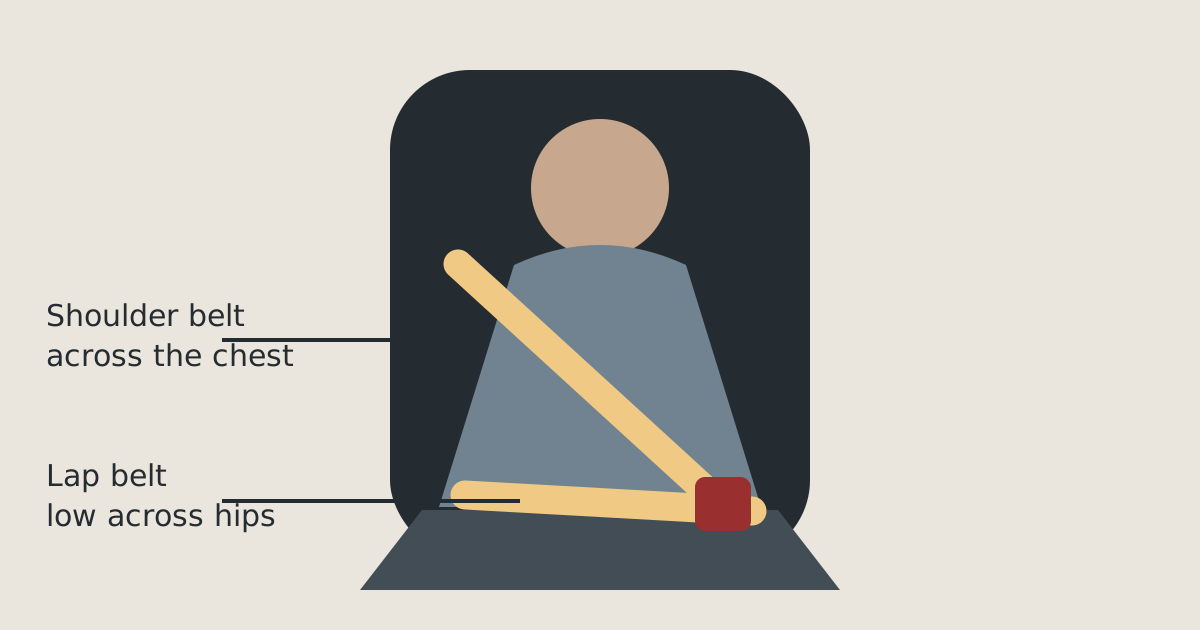
The lap belt should sit low over the hips and upper thighs. The shoulder strap should cross the chest and shoulder. In a collision, the belt helps control how far an occupant moves and reduces the chance of being thrown from the vehicle. Airbags supplement that protection. NHTSA seat belt guidance
Try the check in the seat the person actually uses. A child who sits upright in one vehicle may slide forward in another to bend their knees. That movement can pull the lap belt higher. Adjusting the restraint before departure is easier than trying to correct the fit during the drive.
Can a seat belt cause an injury?
A crash can injure a person even when the belt is worn properly. Whether the belt contributed to a particular injury calls for evidence about the impact, the occupant’s position, and the injury itself. If symptoms are concerning, seek medical evaluation. Keep photographs and relevant records if restraint use or performance later becomes an issue. NHTSA seat belt guidance
If an insurer raises belt use, ask which injury it believes the belt affected and what evidence supports that position. A dispute over injury causation is separate from the question of what caused the crash. California Vehicle Code § 27315(i), reproduced by FindLaw
Check belt fit in the seat the passenger will use
A passenger can buckle up in a few seconds, but it takes a separate check to see whether the belt sits correctly. Ask the person to sit back, let the belt retract, and look at both straps. The lap belt should rest low across the hips and upper thighs. The shoulder strap should run across the chest and shoulder. Keep it in front of the body and away from the neck. A twisted strap or a shoulder strap tucked under an arm is a reason to stop and adjust the fit before driving. NHTSA seat belt positioning guidance
For a child, try the fit in each vehicle the family uses. A child who can sit upright in a smaller car may slide forward in a deeper seat to bend their knees. That change can move the lap belt up toward the stomach. The restraint needs to work throughout the trip, including when the child gets tired and shifts around. Check the car seat or booster instructions, along with the vehicle manual, before moving to a different seating position. California Highway Patrol child passenger guidance
What the five-step fit check looks like in practice
With the child seated, look at five things together. Their back should rest against the seat. Their knees should bend at the seat edge. The shoulder belt should cross the chest and shoulder. The lap belt should sit low and touch the thighs. The child should be able to stay in that position for the whole ride. If any of those checks fails, a booster may help the belt fit correctly. California’s updated definition incorporates the five-step test beginning January 1, 2027. Butte County child passenger safety guidance
This check is particularly useful when another adult is giving your child a ride. Explain which restraint the child uses and check it in that vehicle before the first trip. Show the other adult where the lap and shoulder belts should sit. If the installation or fit is unclear, the California Highway Patrol directs families to local offices for help from child passenger safety technicians. CHP child safety seat assistance
Seat belt fit during pregnancy
NHTSA recommends wearing the belt throughout pregnancy. Place the lap portion below the belly, snug across the hips and pelvic bone, and position the shoulder portion across the chest. If you are driving, adjust the seat so you can still reach the controls comfortably. Bring individual concerns about seat position or belt fit to your healthcare professional. NHTSA guidance on seat belts during pregnancy
If the buckle or belt needs attention
If the buckle fails to latch, the belt will not retract, or the strap shows damage, use a seating position with a working restraint and arrange an inspection. Describe exactly what you observed and when you first noticed it. A description such as “the latch releases when pulled” gives the technician more to work with than a general note that the belt feels loose. Keep the repair paperwork if the vehicle’s restraint condition later becomes relevant. California law places maintenance duties on owners of covered vehicles. California Vehicle Code § 27315
What to preserve when belt use becomes part of a claim
Start with the person’s seating position. A rear passenger’s restraint and the driver’s restraint may be different, so note which seat and belt you mean. If you can safely take photos, record the interior and exterior damage before repairs. Keep the originals and note when the photos were taken. If you are concerned about a buckle or child restraint, ask how to document it before it is replaced or discarded.
Put the medical records on a separate timeline. Note when symptoms began, when the person received care, and which injuries the clinician documented. A photograph may show a damaged buckle, while a medical record can show what injury was diagnosed. Neither record by itself explains the entire crash. A careful account lets someone compare the timing, the impact, the restraint and the injury without relying on a single clue. California Courts personal injury guidance
If an insurer raises a question about the belt, ask which injury it believes the belt affected and what evidence supports that view. Keep that question separate from what caused the vehicles to collide. A lawyer can help identify the records needed to address each issue and explain why a seat belt allegation does not settle the claim on its own. California Vehicle Code § 27315(i)
How to handle a citation alongside an injury claim
Keep the ticket and court notice with your collision paperwork, but track their response dates separately. A ticket can raise an issue about the restraint rule, while the injury claim may require evidence about how the crash happened and which injuries followed. If you speak with a lawyer, bring the exact code section on the citation and any photos showing the seating position. That helps narrow the discussion to the facts of your case and the rule the officer cited.
Frequently asked questions
Does the adult rule apply in the back seat?
Yes, the general rule includes passengers age 16 and older in rear seats of covered vehicles. California Vehicle Code § 27315
Is turning eight enough to stop using a booster?
Check the belt fit in the actual seat. The child’s age and the way the belt rests on their body both matter. CHP child safety seats
Can a faulty buckle affect who is responsible?
A faulty buckle may raise a maintenance or equipment issue. Preserve repair records and ask how to document the belt before repair or disposal.
Do airbags make a seat belt optional?
Airbags are designed to work alongside belts. Keep the belt properly positioned even in a vehicle with multiple airbags. NHTSA seat belt guidance
Does a seat belt violation automatically determine civil fault?
No. Section 27315 limits how a violation can establish negligence as a matter of law. The facts can still matter in a civil claim. California Vehicle Code § 27315(i)